READ THE BOOK!
Read about
Professor TREMBLAY'S coming book:
Thursday,
May 1, 2008
Permanent Wars
for Oil and Permanent Terrorism
“Oil in the next war will occupy
the place of coal in the present war, or at least a parallel place to coal. The
only big potential supply that we can get under British control is the Persian [now Iran] and Mesopotamian [now Iraq] supply....Control over these oil
supplies becomes a first class British war aim.”
Sir Maurice Hankey, Britain’s First Secretary of
the War Cabinet, 1918
"Whatever their publicized angst over Saddam
Hussein's 'weapons of mass destruction,' American and British authorities were
also concerned about violence in an area that harbours a resource indispensable
for the functioning of the world economy."
Alan Greenspan, Fed Chairman 1987-2006
[We
cannot leave Iraq because] "extremists [may] be in a position to use oil as a tool to blackmail the West... and they will do so unless we abandon Israel "
George W. Bush, November 1, 2006
"When
there is a regime change in Iraq, you could add 3 million to 5 million barrels
of production to world supply,"
Lawrence
Lindsey, former George W. Bush's then-chief economic adviser, 2002
"Secure supplies of energy are
essential to our prosperity and security. The concentration of 65 percent of
the world's known oil reserves in the Persian Gulf means we must continue to
ensure reliable access to competitively priced oil and a prompt, adequate
response to any major oil supply disruption.":
U.S. White House, "National Security
Strategy of the United States", March 1990
When
the Bush-Cheney administration took over in January 2001, the international
price of oil was about $22 a barrel. Now, nearly eight years later, the price
of oil is hovering around $120 a barrel, a more than five hundred percent
increase. Thus, as far as oil is concerned, things have
not unfolded in Iraq as planned and expected by the Neocons in the Bush-Cheney
administration. First, they thought that gushing Iraqi oil would pay for the
invasion and occupation of the country. Instead, the cash outlay for this
adventure is likely to reach one trillion dollars, and the total cost to the
U.S. economy will likely surpass three trillion dollars.
Second, the price of oil is reaching record levels with no top in sight and
this is threatening to tip the U.S. and the world economies into a protracted
economic recession. This is partly due to the fact that Iraqi oil output has
not increased as planned and is rather below where it was when the United
States invaded and occupied Iraq in 2003. From a macroeconomic point of view,
this ill-advised and illegal war
has been an unmitigated disaster.
Nevertheless,
despite sporadic pious declarations about leaving Iraq when asked, the
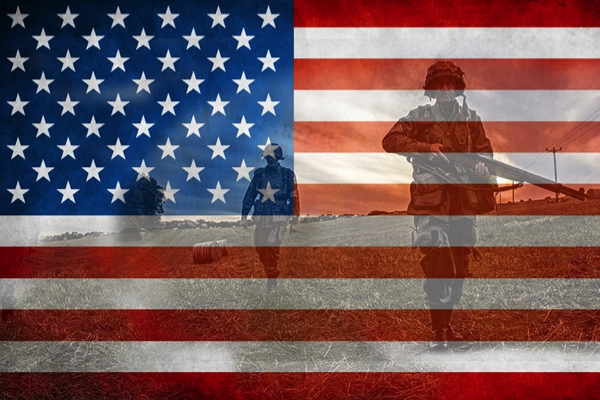
Bush-Cheney administration is planning a 50-Year American military
occupation of Iraq. They do not want to set a date to end the occupation of Iraq, because they see it as an
open-ended military occupation. —This is to be expected, since the real
reasons they invaded Iraq in the first place was to pursue the long run goal of controlling
Middle East oil and of protecting the state of Israel from its Muslim
neighbors. Indeed, everybody knows that the military invasion of Iraq by
American forces had nothing to do with "democracy" or the wishes of the
people. It had everything to do with securing Iraq's oil reserves and with
removing one of Israel's enemies in the person of Saddam Hussein.
Last
May 31 (2007), Secretary of Defense Robert Gates confirmed these long-term
plans when he said that the United States was looking for a "long and
enduring presence" in Iraq. That is the reason the U.S. has built the largest embassy in the world, 21 buildings on a 100-acre site on the
banks of the Tigris, which will be capable of housing one thousand employees.
That is also why they are consolidating some 100 plus military bases in that
Muslim country into 14 permanent super-military bases – all geared
to control militarily that part of the world for a very long time.
This is also why
the Bush-Cheney administration is pushing the Iraqi Parliament hard to adopt a
law that would privatize the Iraqi oil
industry. If the current
puppet regime now in place in Iraq were to refuse passing such a law, the so-called
"Hydrocarbon Act", it would lose over a billion dollars in reconstruction funds
that would be blocked by the Bush-Cheney
administration.
This overt
military grab of the oil resources of a Middle East nation is a sure recipe for
feeding permanent terrorism in the world and permanent war in the Middle East
for as long as one can see. And if Americans elect a Republican president for a
third term next November, by voting for presumptive Republican presidential
nominee, Senator John McCain (R-AZ), that is
what will happen since this politician is already committed to a one hundred year war
in that part of the world.
According to polls, a
vast majority of Iraqis is opposed to the privatization of their oil industry.
Nevertheless, privatization of Iraqi oil
is one of the main "benchmarks"
that the Bush-Cheney administration is imposing on the Iraqi government.
It has
installed in occupied Iraq a puppet government of its own that is delivering
the merchandise, even though some arm-twisting pressure has been
necessary. Last July 3 (2007), for instance, the U.S.-controlled al-Maliki's
Cabinet approved, with no Sunni ministers present, a US-backed draft oil law that will share Iraqi oil wealth between the three
main Iraqi groups, but which will, above all, let American and foreign
oil companies into the Iraqi oil sector and enact privatization under so called
production sharing agreements. This
has been a key political target and even a
"benchmark" set by the Bush-Cheney White House, but so far the Iraqi
Parliament has balked in approving the required controversial legislation, because there have been many protests, many Iraqis being
very reluctant to adopt a policy of sharing oil production and revenues with
foreign oil companies, especially when they have been taken away from them "at gunpoint".
The Iraqi oil
industry has been nationalized since 1975, some thirty-three years ago. Indeed,
before the American-led military invasion and occupation of Iraq, the Iraqi oil
fields were controlled by the Iraqi government through
a state-owned corporation. This was the foundation for a relatively high
standard of living in Iraq, which had one of the best health care systems in
the region and was producing more Ph.D.s per capita than the U.S. It is this
prosperity and this wealth that are being destroyed by the Bush-Cheney
administration. Under their military occupation of Iraq and the contemplated
oil arrangements, much of Iraqi oil production and oil revenues would fall
under the control of foreign oil companies, mainly American and British
[Exxon/Mobil, Chevron/Texaco, BP/Amoco, and Royal Dutch/Shell].
One
of the two main rationales for launching the illegal invasion of Iraq would
have been accomplished, i.e. to keep the flow of oil going,
under the surveillance of American troops, the other rationale being the
destruction of one of Israel's strategic enemies. — Many
knowledgeable observers, such as Australian Defense
Minister Brendan Nelson, have confirmed that
Oil Supply Security was
a paramount reason for the Iraq invasion and occupation when he said that maintaining "resource security" in
the Middle East was a priority. That is the reason why, when the
American armies arrived in Baghdad, in early April 2003, their orders were to
secure only one kind of public buildings, those of the Iraqi Oil Ministry. All
the rest did not matter.
Finally, let us remember that on October 11, 2002, the U.S. Senate voted 77-23 to give George W. Bush and Dick Cheney a blank check authorization to launch a war of aggression against Iraq. Two current presidential candidates, John McCain and Hillary Clinton voted for the resolution. Let us remind ourselves also that ten days earlier, the Central Intelligence Agency (CIA) had issued a confidential 90-page classified version of the National Intelligence Estimate, which contained a long list of dire consequences to follow if the USA were to invade Iraq. The report was made available to all 100 senators, but only six of them bothered to avail themselv