|
Thursday, September 3, 2009 The
Afghanistan-Pakistan War: Obama's Vietnam?
"Our interest in Afghanistan is to prevent it
from becoming a haven for terrorists bent on attacking us. That does not
require the scale of military operations that the incoming administration is
contemplating. It does not require wholesale occupation. It does not require
the endless funneling of human treasure and countless billions of taxpayer
dollars to the Afghan government." Bob Herbert, The New York Times, January 6, 2009 "I don't want to just end the [Iraq] war, but I want to end the
mind-set that got us into war in the first place." Presidential candidate Barack Obama, January 31,
2008 “If we are strong, our character will speak
for itself. If we are weak, words will be of no help.” John F. Kennedy (1917-1963) 35th U.S. President “No nation ever profited from a long
war.” Sun Tzu, author of “The Art of War” A solid majority of Americans (54 percent) now oppose President
Obama's Afghanistan-Pakistan
War. In fact, among Democrats, only twenty-six (26) percent
support such a foreign war. In other words, by enlarging this conflict,
President Obama is governing as if the opinion of a majority of Americans and
of his own political base did not matter. In a democracy, a politician can do
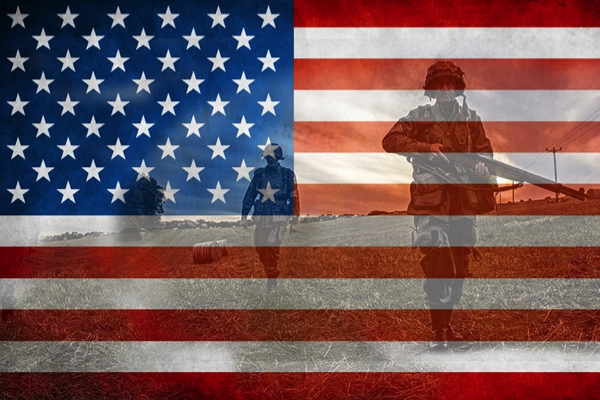
that for a while, but not for very long. This undeclared war, just like LBJ's Vietnam
War (1959–1975) and George W. Bush's Iraq War, is an adventure
with no clear objective and no clear exit strategy, but with tremendous costs
in lives and money. Nobody can tell if the U.S. and NATO are killing people
in Afghanistan and in Pakistan because this is an operation to stop al-Qaeda
terrorists from mounting future Sept. 11-type attacks, or because it is part
of a larger plan to counter a Taliban insurgency and prevent this Pashtun
Islamist party to regain power. But also, it has been said that it is a war
waged to protect a pipeline
crossing Afghanistan. Such a pipeline would move oil from the Caspian Basin
to the coast of Pakistan through Afghanistan. Nevertheless, since this is not
clearly explained, the war remains a blur for most people. The reason why
such a war brings fewer open protests than the Vietnam War is essentially
because it is waged with mercenaries. That may be a reason why such open-ended wars fought
with mercenaries can last for so long. For its part, Great Britain, a country
used to colonial occupations, says through its incoming military Chief of
Staff, General Sir David Richards, that it could stay in Afghanistan for 40
years. Even Germany seems to have regained its taste for
military adventures, as its Defense Minister says it could occupy Afghanistan
for ten
years. With this frame of mind, the world could be back in
the nineteenth century, a century characterized by the anarchy of lawless
armed conflicts, with militarized empires involved in prolonged wars, if not perpetual
wars, with colonial and imperial military occupations. If the
collapse of the Soviet empire in 1991 has simply ended the restraining its
presence imposed on other empires from being lawless and imperialistic, then
the world may be on a very dangerous course. It will be back to the future.
All the democratic ideals of the second part of the twentieth century would
be gone. One has the feeling that such badly designed
military adventures as the Afghanistan war, with no clear objectives in
sight, are primarily launched and expanded to keep the military establishment
busy and the military-industrial
complex prosperous. Mired in financial scandals and plunged into a deep
economic recession, many Americans suffer from war exhaustion. There seems to
be too many of these endless and costly wars, even though the professional
warmongers relish them. For his part, Secretary of Defense Robert Gates
declares that the American public is “pretty tired” of the
seemingly endless war in Afghanistan, and he believes that the situation has
to be turned around in a
year. Indeed. Only a few months ago, a substantial
majority of Americans thought they had kicked the Bush-Cheney neocon
warmongering crowd out of power. Those who favor American-led wars of
aggression had a choice in voting for Republican candidate John
McCain. But, to no avail. The Obama-Biden soft-neocon crowd
seems to be in the same camp as Bush and McCain. Nothing of substance has
changed, or hardly. At least in terms of foreign policy, the question
can be asked if the Obama-Biden administration is anything more than a third term
of the Bush-Cheney administration? The Obama-Biden administration did not
arrive in power determined to take control of the government apparatus and to
change its direction. In fact, the reverse seems to have happened: It was
pre-empted and subdued by the entrenched governing nomenklatura. This
reflects a lack of preparedness, dedication and vision. As soon as it was sworn in, the Obama-Biden
administration began planning to enlarge the Afghan conflict with more troops
and more mercenaries, and, to make its intentions crystal-clear, kept in his
post Bush's Secretary of Defense (Robert Gates) while asking Congress for
$109 billion more funds to finance the adventure. Then President Obama fired
Gen. David McKiernan, who had been in charge in Afghanistan, and replaced him
with Lt. Gen. Stanley McChrystal, a former Green Beret who lead the secretive
Joint Special Operations Command, an outfit of commando teams that was
involved in widespread murder and carnage in Iraq. And, what is strange, Lt.
Gen. Stanley McChrystal proposed to President Obama the adoption of a Soviet
Strategy of building bases and troop build-up for Afghanistan.
With friends like this, Barack Obama needs no enemies. As a matter of fact, Obama's political enemies,
beginning with Rupert
Murdoch's Wall
Street Journal, but also other right-wing corporate media, are
salivating at the thought. I wonder how many editorials the WSJ will write
supporting candidate Obama in 2012! But the die is cast: President Barack Obama now
“owns” the Afghanistan-Pakistan (AfPak) war and he will have to
live with the consequences. If the British and Soviet examples of foreign
occupations in that part of the world are good indications of things to come,
Commander-in-Chief Obama is going to be bogged down in this devastated
mountainous land for years to come, and this may very well cost him his
presidency in 2012. For a while, the Republicans and some neocon Democrats
are going to cheer him. But later on, most Americans are going to turn
against him. Let's place things in perspective here. Just as in
Vietnam, the U.S. is intervening in a civil war involving Pashtuns (40% of
the Afghan population), Uzbeks, Tajiks, and Hazara Shiites, among over ten
minority groups sharing a traditional and often repressive
and barbaric Islamic culture, in a country called
Afghanistan. And it is waging guerrilla warfare in Afghan villages and towns
in order to support a corrupt and illegitimate Islamist government. The foreign soldiers are trying to “flush out
the Taliban from villages” just as they were trying to flush out the
Vietcong from villages. Since such wars cause many civilian deaths, sooner or
later, the entire population will turn against the foreign military invaders
and they are likely to be kicked out. That was the story in Vietnam and there
is little doubt that this will be the story in Afghanistan-Pakistan. Sending
more troops to this Asiatic region will only make matters worse.
The advantage for the military establishment, besides generals getting a few
stars on the shoulder, is that a prolonged conflict will keep the money
flowing in their coffers and in those of their suppliers. But wait. Now Obama is enlarging the Afghan
conflict, not only by waging a drone war against tribesmen in Pakistan, but
he also wants to turn the Afghanistan war into a war against Afghan drug
lords. The logic here, I gather, it to multiply your enemies:
the Taliban, al-Qaeda, Pakistan tribesmen, Afghan drug lords, etc. The more
you have, the more likely the conflict will endure. When you forget that the initial objective in
Afghanistan, after the 9/11 attacks, was a narrow one, i.e. to prevent that
country from becoming again a haven for terrorists, it is easy to widen a
conflict ad nauseam. As a matter of fact, this was tried before in
Afghanistan. The Soviets tried it for nine years, from December 1979 to
February 1989, and despite sending in hundreds of thousand troops, they did
not succeed. It was the Soviet Union's
Vietnam War, to paraphrase Zbigniew Brzezinski, President
Jimmy Carter's Security advisor. Similarly, Obama's war in Afghanistan-Pakistan would
require hundreds of thousands of troops on the ground. Like the Soviet Union,
the U.S. is building large military bases in Afghanistan and its commanders
think there are never enough troops. Presently, the U.S. has some 60,000
troops in Afghanistan. Next year, it is easy to predict it will have more
than 100,000 troops in that remote country, if the current policy is
followed. And under what legal basis? It is stretching quite a
bit the terms of the U.N. Security Council's resolution 1368
of September 12, 2001, to justify an open-ended war in Afghanistan and in
Pakistan. That resolution was adopted under Article 51 of the U.N. Charter that affirms the
inherent right of individual or collective self-defense. Since the 9/11
terrorists had trained in Afghanistan under Taliban control, such training
camps had to be dismantled, either by the Afghan government or by external
forces. Since the Taliban government refused to comply, the U.S. was in its
right to intervene. Thus the overthrow of the Taliban government and the
destruction of al-Qaeda training camps in that country. This was done in the
fall of 2001. On December 20, 2001, the U.N. Security Council
(Resolution 1386) authorized the creation of a NATO-led military
international force to assist the newly established Afghan Transitional
Authority in creating a secure environment in and around the capital Kabul
and to support the reconstruction of Afghanistan. That's the legal reason why
there are foreign soldiers in Afghanistan. They operate under the umbrella of
the so-called International
Security Assistance Force (ISAF), whose mission has been
expanded, year after year, to cover most of Afghanistan (see U.N. Security
Council Resolution 1510). Later, the U.N. Security Council also authorized a
mission of assistance in Afghanistan. In March 2002, the U.N. Security
Council organized an Assistance Mission in Afghanistan's (UNAMA) with the
adoption of Resolution 1401.
UNAMA's primary mandate is “to manage all humanitarian, relief,
recovery and reconstruction activities.” That mandate has been renewed
in March of each year, the last time on March 23, 2009, extending it until
March 23, 2010. But now we are in 2009, eight years after 2001. Is
there really a legal basis for the U.S. to drop bombs over villages in
Pakistan and to occupy Afghanistan indefinitely with foreign troops? There is
some play with words here. For example, the European countries participating
in the NATO-U.S.-led mission in Afghanistan talk about a “police
mission” to justify the presence of their soldiers in Afghanistan. In
fact, this so-called police mission has turned into a permanent military
occupation of Afghanistan and into a guerilla war against local militants and
insurgents, in both Afghanistan and Pakistan. Let's keep in mind that many of the so-called
"militants" or “insurgents” in Afghanistan, the Mujahideen
and to a certain extent the Taliban, used to be called “Freedom
fighters” by President Ronald Reagan (see the Reagan Doctrine)
when they were fighting the Soviet invaders, with the help of the American
C.I.A., Saudi Arabia and the Pakistani secret police (ISI). This shows how
such “freedom fighters” conveniently change names when they
switch camp! They have gone from being called “heroic” to being
called “insurgents”. Such is the propaganda of war. —An
historical fact remains: The unintended consequence of the Reagan Doctrine is
the current Afghanistan-Pakistan war, and it may have played an important
role in preparing the ground for the 9/11 catastrophe. Nevertheless, let us say that this is stretching the
U.N. Charter to the limit to say that it now permits the permanent military
occupation of a sovereign country by foreign troops. It is true that the U.N.
Charter, under Chapter
VII (Action with Respect to Threats to the Peace, Breaches of
the Peace and Acts of Aggression), can authorize collective action against a
country for good reasons. But the intent of such a military intervention is
to be short-term and not to be turned into a permanent colonial occupation. In conclusion, let us say that since the Obama
administration is clearly enlarging the Afghan conflict and has authorized
drone bombings in Pakistan, it would seem that the U.N. Security Council
should be called to authorize or condemn such an enlargement of the conflict.
It should also indicate that it favors a compromise solution to the conflict. __________________________________________________ Rodrigue Tremblay is professor emeritus of economics at the University
of Montreal and can be reached at He is the author of the book 'The
New American Empire'. Visit his blog site at www.thenewamericanempire.com/blog.
Author's Website: www.thenewamericanempire.com/ Check out Dr. Tremblay's coming book "The Code for Global Ethics" at: www.TheCodeForGlobalEthics.com/ *****The French version of the book is now available.
See: www.lecodepouruneethiqueglobale.com/ or on Amazon: Register to be alerted when the English
version is available by sending the word “Code” to
bigpictureworld@yahoo.com Please visit the book site at: www.TheCodeForGlobalEthics.com/ _____________________________________ Posted, Thursday,
September 3, 2009,
at 5:30 am Email to a friend: http://www.TheNewAmericanEmpire.com/tremblay=1115 Send contact, comments or commercial reproduction
requests (in English or in French) to: N.B.: Messages may be published in our
weblog, unless you request otherwise. Please register to receive free alerts on new
postings of articles. Send an email with the word "subscribe"
to: bigpictureworld@yahoo.com To unregister, send an email with the word "unsubscribe"
to: bigpictureworld@yahoo.com The above is presented for
educational purposes only. © 2009
by Big Picture World Syndicate, Inc. (Home: TheNewAmericanEmpire.com) |