Friday, May 16, 2008
In a Casino
Mentality, The Economy Goes From Bubble to Bubble
[U.S.]
"strategy should aim, above all, at the removal of Saddam
Hussein’s regime from power."...[His
removal is absolutely vital to] "the security of the world in the first
part of the 21st century" and for "the safety of American troops in
the region, of our friends and allies like Israel and the moderate Arab states,
and a significant portion of the world's supply of oil."
Neocons'
January 26, 1998 letter to President Bill Clinton
[About the Iraqis] “If they turn on their
radars we're going to blow up their goddamn missiles. They know we own their country.
We own their airspace... We dictate the way they live and talk. And that's
what's great about America right now.
It's a good thing, especially when there's a lot of oil out there we
need.”
U.S. Air Force Brig. General William Looney, head of
the US-UK flying operation south of the 32nd
parallel over Iraq (no-fly zones), interview reproduced in the Washington
Post, August 30 1999, [quoted
in William Blum's book, Rogue State,
Common Courage Press, 2005, p. 159]
"Focus
your operations on the oil, especially in Iraq and in the Gulf, as this would
mean [the West's] death."
Osama bin Laden, December 2004
"The
high crude oil prices do not have any relation to production or
consumption,"... [It is] "because
of the decrease in the value of the dollar."
Mahmoud Ahmadinejad, Iran President, April 2008
The American
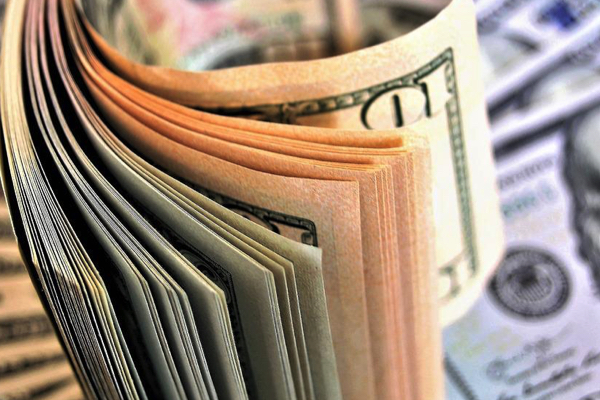
economy seems to be going from bubble to bubble: in 2000, it was the tech
bubble; in 2005, it was the housing bubble; and now, it is the oil and
commodities bubble. In fact, the entire world of investment is now a giant
casino where speculators are in charge and where governments look the other
way. For many basic marketable staples (rice, wheat, and corn) and commodities
(oil, gas, metals), prices have no relation to the underlying values of what is
being traded. Such prices are mostly driven by bad policies and by the
pyramidal “greatest fool” technique by which large off-shore
speculators navigate through unregulated derivatives
to push prices up ever further, until the bubble burst. Meanwhile, a lot of
disruptions may be created and people's lives may have been endangered or lost.
The current famine in
many countries is the end result of such government approved manipulation of
markets, by OPEC and a host of other cartels and
so-called speculative hedge funds.
Is it
possible for an economy to grow and prosper without always being on a roller
coaster? Indeed, does the current explosion in oil and commodities prices
reflect real supply and demand shifts, such as supply disruptions, or is it
also or even mainly driven by geopolitical factors and financial speculation
that fuel an ever larger insatiable artificial demand?
It is my feeling that the plummetting U.S. dollar is
having serious unintended economic consequences worldwide. Indeed, such a panic
devaluation of the most widely used key currency
is fueling a major rush out of dollar holdings into hard assets, such as oil,
gold and other commodities. Central banks, companies and individuals are losing
faith in the dollar paper currency, which has been depreciating fast against
other currencies, but whose intrinsic value is also expected to be eroded
further by the coming inflation that will inevitably follow the Fed's current
liquidity creation. All these problems are interconnected.
Let us remember that the oil problem in the U.S. is
largely a self-inflicted predicament since the U.S. government opted to move
away from a self-sufficiency and a renewable-energy based economy. In 1982, for
example, the U.S. daily consumption of oil had been brought down to about 9
million barrels a day, from 14 million barrels a day before the 1973 OPEC-initiated
oil shock. Since the U.S. was producing about 9 million barrels of oil a day,
it can be said the American economy was then self-sufficient in that form of
energy needs. The Reagan administration changed all that: No more 55 an hour
driving limits; reduced obligations for car manufacturers to raise gas mileage;
no more restrictions, fiscal or otherwise, on the purchase of gas guzzlers,
etc. The result is that the United States, with less than five percent of the
world population, now consumes 25 percent of the daily world oil output,
roughly 22 million barrels a day out of about 88 million barrels produced daily
worldwide. And, here's the gist, 60 percent of that oil has to be imported.
What's more, for the world as a whole, also 60 percent of oil imports come from
the unstable Middle East. That's what we can call playing with fire!
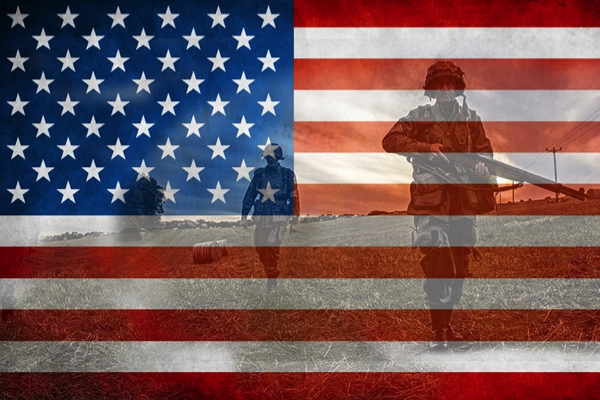
Therefore, since oil access under American control
played an important part in the Bush-Cheney's decision to launch an unprovoked war against Iraq
in the spring of 2003, in order to turn that sovereign country into an American
oil protectorate under management by a few major Anglo-American oil companies,
it can said that the seeds for this illegal war were sown way back, during the
Republican Reagan administration. That was when the philosophy of deregulation
was rampant and was then hailed as a success. But, as a consequence,
twenty-five precious years have been lost in preparing the U.S. economy for the
time when oil would become a scarce energy source. Now, this time has arrived,
but this is still the era of Hummer type vehicles that can only run on large
quantities of costly and risky imported oil.
Indeed, in the U.S., there are now three cars for four
adults and those cars are larger and have more powerful engines than anywhere
else in the world. If only a few countries, such as China and India, were to
emulate the United State in that regard, as their income levels rise, world oil
consumption would more than double. But with no known (conventional) oil
reserves to meet such an expanded demand, oil prices would skyrocket, crushing
the purchasing power of consumers and raising inflation. The result would be a
major worldwide economic crisis before economically viable alternative energy
sources could be developed. This could take ten to twenty years.
Are we there now? If not, we are moving fast toward
that day of reckoning, while do-nothing or complicit governments hope for a
miracle or some magic solution. The main consequences will be rising inflation,
19th century wars for securing resources, and a
worldwide economic slowdown in production and trade. The next twenty years
should prove to be interesting for a few, but taxing for the many.
Rodrigue Tremblay is professor emeritus of economics at the University
of Montreal and can be reached at rodrigue.tremblay@yahoo.com
He is the author of the book 'The
New American Empire'
Visit his blog site at: www.thenewamericanempire.com/blog.
Author's Website: www.thenewamericanempire.com/
Check Dr. Tremblay's coming book "The Code for Global Ethics" at: www.TheCodeForGlobalEthics.com/
Posted, Thursday, May 16, 2008, at 5:30 am
Email to a friend:
http://www.TheNewAmericanEmpire.com/tremblay=1087
Send
contact, comments or commercial reproduction requests (in English or in French)
to:
N.B.: Messages may be published in our weblog, unless you request
otherwise.
Please register to receive free emails on new postings of
articles.
Send
an email with the word "subscribe" to: bigpictureworld@yahoo.com
To
"unsubscribe", write the word "unsubscribe" and send it to:
bigpictureworld@yahoo.com
Disclaimer: All quotes enclosed in this article are
believed to be accurately attributed, but no guarantee is made, even after a
thorough check, that some error cannot be found.
(Home: TheNewAmericanEmpire.com)
©
2008 by Big Picture World Syndicate, Inc.