READ THE BOOK!
|
Read about
Professor TREMBLAY'S coming book: *** Lisez des extraits du livre du Professeur
TREMBLAY : Le code pour une
éthique globale Friday,
November 14, 2008 The Foreign Policy of an
Obama Administration
“Either
man will abolish war, or war will abolish man.” “In
the field of world policy I would dedicate this nation to the policy of the
good neighbor—the neighbor who resolutely respects himself and, because
he does so, respects the rights of others.” President
Franklin D. Roosevelt (March 4, 1933) “I
believe in a whole lot of things that make me progressive and put me squarely
in the Democratic camp.” Sen.
Barack Obama, (July 8, 2008) President-elect Barack Obama
is a nice guy and a fresh political face. His election on November 4 (2008),
as president of the United States, is a great personal achievement. At the very least, he deserves the
benefit of the doubt. Indeed, President-elect Obama has received from the American
electorate an unequivocal public mandate for change. It is fair to say that
his election creates an opportunity for the United States to tackle a number
of systemic problems that have beset this proud nation for a long while. The most
important revision that could be made is the way Americans see their country
in the world. Is the U.S. an old-style empire that uses empty phrases to
advance imperialistic interests through military force? Or is the U.S. rather
the first country truly founded on the Enlightenment
principles of equality of all human beings, of individual
freedom and responsibility, and of the democratic system of government, as
embodied in the U.S. Constitution? Which is it going to be under an Obama
administration? Since World
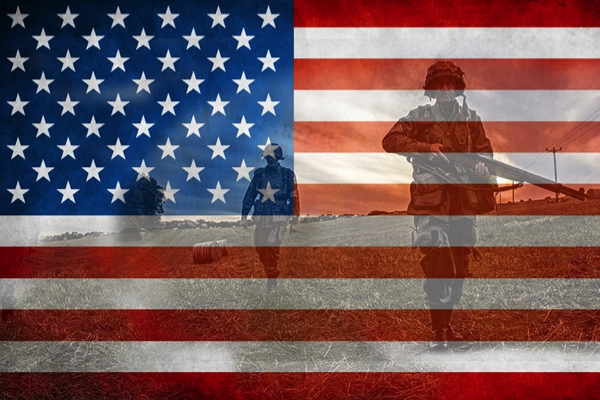
War II, the United States has been obsessed with its military
power. The fact that the U.S. played such a central role in defeating Nazi
Germany and imperial Japan went to the head of most American politicians and
of many American citizens. Suddenly, the U.S. saw itself as grander than
nature, a messianic, self-appointed “leader
of the free world”.
It was a mission that the military-industrial
complex was eager to embrace with enthusiasm. Towards the
end of World War II, General Motors CEO Charles Wilson advanced the fateful
idea of a permanent
war economy with ever increasing military expenditures, and
with military bases all around the world. On April 14, 1950, Wilson's ideas
were officially adopted by the U.S. government when National Security Council Document
68 was issued by the Truman administration. It was the
framework for an amoral and costly foreign policy that propelled the United
States upon a dangerous path and which, nearly sixty years later, is
threatening to push it toward financial and moral bankruptcy. Indeed, it is
because of this far-reaching policy that the United States today spends more
on the military than all the other nations of the world combined and has been
willing, under George W. Bush, to engage in a war of aggression. Even before,
however, numerous foreign military adventures, beginning with the Korean
War (1950–53), followed the adoption of this
militaristic policy. The worst blunder was undoubtedly the ill-advised and
gratuitous Vietnam War
(1959–1975), in which some 55,000 young Americans and more than one
million Vietnamese lost their lives, all for naught. It was also a major
component of the Cold War with the
Soviet Union. The obsession
with anything military turned tragic in the 1980s, under Ronald Reagan, when
propagandists began to present the United States as the “good
empire” as compared with other “evil empires”. Of course,
the most grotesque rendering of this delusion reached its zenith under George
W. Bush, when the United States perceived itself as being above international
law, in its self-appointed “mission” or “crusade” to
impose American-style democracy and promote U.S. economic interests around
the world with tanks and bombs. This
transformation of a law-abiding American republic into a somewhat rogue empire
above the law was bound to have many dire
consequences, for both itself and for the world. In the past,
the myth of a so-called U.S. "Manifest
Destiny" under a divine authority, and of American
exceptionalism, has often surfaced in American history, but
rarely as intensely as it was witnessed during the last quarter century. Used
initially by the Jacksonian Democrats to justify the extermination of the
Indians and the conquest of the American West, the myth was promoted by the
Republicans in the 1980s to pave the way for the ideology of an American
world hegemony. As if to
corroborate historian Arnold Toynbee's 100 year cycle of imperial wars, the
same myth had been used in the 1890s by members of the Republican Party
to justify their seizure and occupation of former Spanish foreign colonies
during the Spanish-American War
of 1898. At that time, the United States embraced a policy of imperial
conquests, with the occupation of the Philippines, Puerto Rico and Panama. Recently, the
powerful neo-conservative
movement adopted the same ideology of American moral
superiority, presenting the policy of militarism and of imperialism as
something "good". The neocons,
indeed, have been the principal proponents of total global military
domination by the United States. They have been the main driving force within
the Bush-Cheney administration behind the American-led war of aggression
against Iraq. Soon, in
January 2009, a new Obama administration will be inaugurated. Normally, if it
really wants to change things, a new administration must spell out clearly
its agenda during the first 100 days, before everything becomes
“business as usual”. This is a moment to be seized and not be wasted,
especially with the type of widespread mandate the incoming administration
has received. Will President
Barack Obama deliver on his promise of change and adopt new and bold
progressive policies? Indeed, will he have the wisdom and courage to revisit a
more than half-century old foreign policy that has outlived its pertinence,
and dare bring forward a new vision and a necessary change of direction?
—At the very least, the question deserves to be raised. _____________________________________ Rodrigue Tremblay is professor emeritus of economics at the University of Montreal and can be reached at: rodrigue.tremblay@
yahoo.com. He is the author of the book 'The
New American Empire'. Visit his blog site at www.thenewamericanempire.com/blog. Author's Website: www.thenewamericanempire.com/ Check Dr. Tremblay's coming book "The
Code for Global Ethics"
at: www.TheCodeForGlobalEthics.com/ _____________________________________ Posted, Friday, November 14, 2008, at
5:30 am Email to a friend: http://www.TheNewAmericanEmpire.com/tremblay=1103 Send
contact, comments or commercial reproduction requests (in English or in
French) to: |